Methylation sequencing (also known as bisulphite sequencing) is the use of bisulfite treatment of DNA to determine its pattern of methylation. DNA methylation was the first discovered epigenetic mark, and remains the most studied. In animals it predominantly involves the addition of a methyl group to the carbon-5 position of cytosine residues of the dinucleotide CpG, and is implicated in repression of transcriptional activity.
Genome-wide DNA methylation is mapped with one of the three most commonly used assays, resulting in methylation-specific DNA sequencing or microarray data (CpG methylation array).
Figure: CpG methylation array analysis workflow
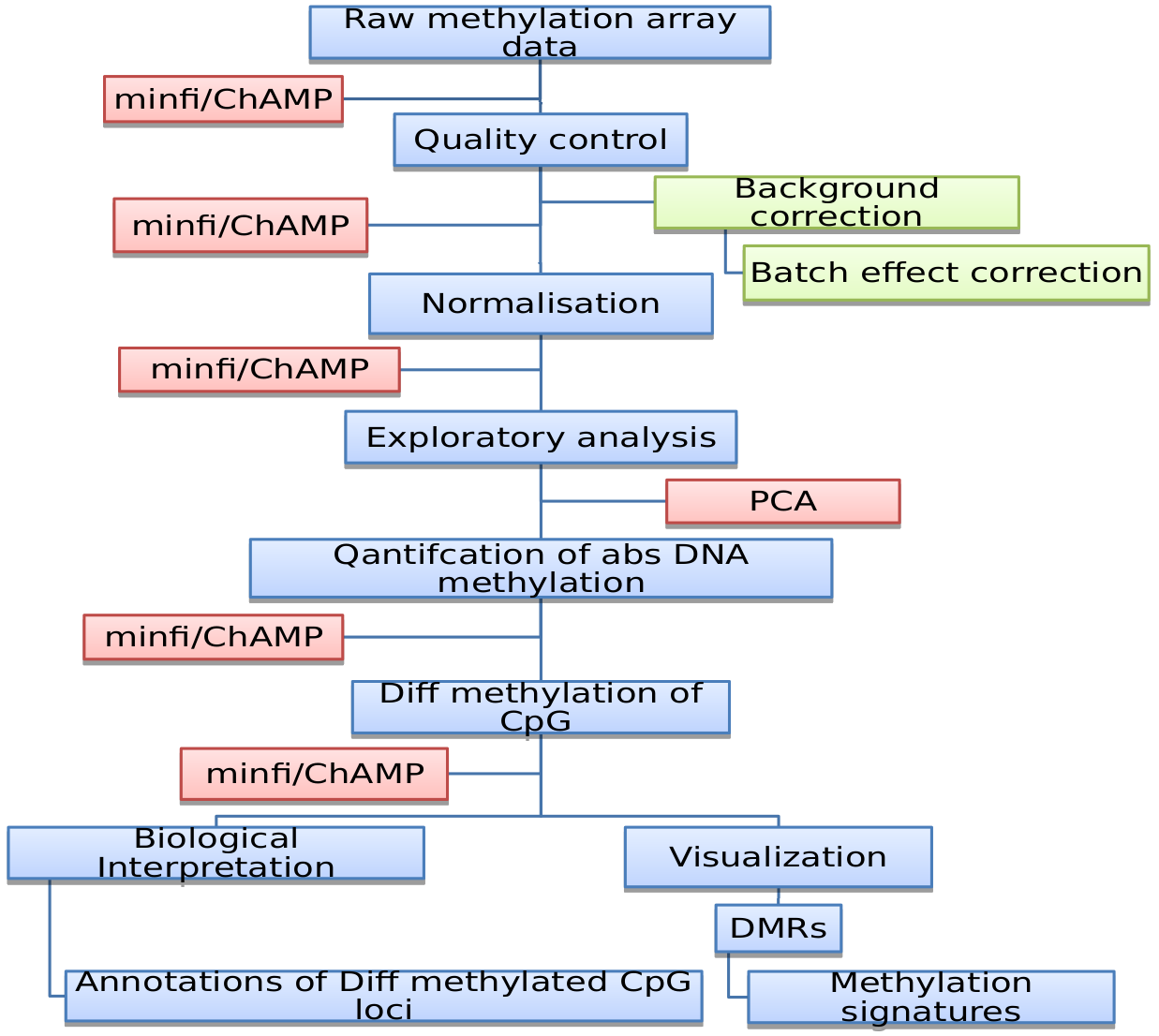
Raw data for CpG methylation array need to be in idat format.
Quality control checks on raw sequence data coming from high throughput sequencing provides a quick impression of whether your data has any problems of which you should be aware before doing any further analysis.
ChAMP/minfi will be used to study and correct background noise & batch effect in raw data prior to downstream analysis.
Subset-quantile Within Array Normalization (SWAN) will be performed on pre-processed data. This step will substantially improve the results from this platform by reducing technical variation within and between arrays. Minfi will be used to normalize using SWAN.
DNA methylation is an epigenetic modification known to play a prime role in gene silencing and is an important topic in epigenetic research. ChAMP/minfi is a program to identify methylated sites from methylation array.
SeqMonk, is tool which is used to visualize the methylated regions on gene of interest or global methylation level. methylKit will be used annotate diff methylated regions.